
Last Updated: November 15, 2026
Quick Summary
Yes, LED light therapy works for acne, but with real limits. A 2024 review found 92% of patients saw partial remission of acne lesions with visible-light therapy, and it suits mild-to-moderate acne best. Expect four to eight weeks of regular use before judging results.
- Blue light at around 415 nm targets Cutibacterium acnes bacteria, while red light at around 633 nm calms inflammation and supports healing.
- Daily blue LED use outperformed twice-weekly sessions in a 2009 study, so consistency matters more than intensity.
- In one reviewed comparison, blue-red LED cut lesions by 35% at the study midpoint, versus 41.7% for intense pulsed light.
- Log lesion counts weekly with consistent photos, and decide at week 12 whether the device is working for you.
- Check that a home mask states its wavelengths, irradiance or dose, eye protection, and a clear regulatory claim before buying.
Table of Contents
- Does LED Light Therapy Work for Acne? What the Evidence Shows
- Blue Light Therapy for Acne: Targeting Cutibacterium acnes
- Red Light Therapy for Acne: Calming Inflammation and Supporting Healing
- How Long Does LED Light Therapy Take to Work for Acne?
- LED Light Therapy Risks and Side Effects You Should Know
- Choosing an At-Home LED Mask That Fits Your Routine
- Frequently Asked Questions
Does LED Light Therapy Work for Acne? What the Evidence Shows
Does LED light therapy work for acne? The short answer is yes, but with real limits. A 2024 review found that 92% of patients saw partial remission of acne lesions with visible-light therapy, and 95% of treated people showed some improvement, according to the PMC review of visible light in acne treatment. At Cholora, we think that number deserves context before you spend money on a mask.
LED light therapy is a treatment that uses specific wavelengths of light, called light-emitting diode or LED light, to target acne-causing bacteria and inflammation on the skin. It is not a cure, and it is not a substitute for a dermatologist's plan.
Light therapy is generally considered most suitable for mild-to-moderate acne, and it is less suited to severe cystic breakouts.
Below, we break down what the research actually shows, which light colors do what, and how to judge results without wasting months.
Blue Light Therapy for Acne: Targeting Cutibacterium acnes
Blue light therapy for acne works by hitting the bacteria that drive breakouts. The target is Cutibacterium acnes, the bacterium linked to inflammatory acne. Blue light at around 415 nm triggers a reaction inside these bacteria that reduces their numbers.
That matters because less bacteria means less inflammation, and less inflammation means fewer new blemishes.
The evidence is decent here. A 2009 paper reported that twice-weekly in-clinic blue LED treatment reduced acne lesions, and that daily use was more effective, per the clinical efficacy study on self-applied blue light. Daily beat twice-weekly. That is a useful signal for anyone using a home device.
A few practical points:
- Blue light targets surface bacteria, not deep cysts
- It works best on inflammatory papules, the red raised spots
- Consistency matters more than intensity
- Results build over weeks, not days
If you want the wider evidence on LED masks for another skin concern, our guide on whether LED masks work for fine lines and wrinkles covers it.
Red Light Therapy for Acne: Calming Inflammation and Supporting Healing
Red light therapy for acne takes a different path. Instead of killing bacteria, red light at around 633 nm reaches deeper into the skin and supports the healing response. It calms inflammation and may help with redness and the marks acne leaves behind.
This is why combined blue-and-red devices have become the norm. A 2025 seven-week study tested an FDA-approved device using blue light at 415 nm plus red light at 633 nm on teens and adults with mild-to-moderate acne, as reported in the Journal of Clinical and Aesthetic Dermatology. The researchers described the device as effective and safe.
Here is where expectations need a check. In one reviewed comparison, blue-red LED light cut lesions by 35% at the study midpoint, while intense pulsed light hit 41.7% and pulsed dye laser reached 90%, according to the review of light-based acne therapies. LED is the gentlest option, and it shows in the numbers.
| Light type | Main job | Best for | Typical speed |
|---|---|---|---|
| Blue light | Reduces C. acnes bacteria | Inflammatory papules | Weeks of daily use |
| Red light | Calms inflammation, aids healing | Redness, post-acne marks | Weeks to months |
| Blue + red combo | Bacteria plus healing | Mild-to-moderate acne | Weeks of regular use |
| IPL / laser | Stronger, clinic-based | Moderate acne, scarring | Fewer sessions, higher cost |
Best for: mild-to-moderate inflammatory acne. Skip if: you have deep cystic acne or active nodules, which need medical care.
Lesion reduction at study midpoint by light-based therapy
How Long Does LED Light Therapy Take to Work for Acne?
How long does LED light therapy take to work for acne? Expect four to eight weeks of regular use before judging results.
But a timeline is only useful if you can tell whether you are on it, and most people judge from memory. A simple tracking routine fixes that.
Set a baseline before your first session. Count and record active lesions by type: inflammatory papules and pustules, blackheads and whiteheads, and any nodules or cysts.
Repeat the count weekly, not daily. Daily counting invites noise and anxiety. Once a week, at the same time, recount the same categories and take the same photo.
Log irritation separately from acne. Redness, warmth, dryness, or stinging after a session is a tolerability signal, not an acne count.
Use decision points, not vibes. A common pattern is:
- Weeks 1-2: little visible change; focus on tolerability and building the habit
- Weeks 3-4: redness around active spots may ease; lesion counts may not move much yet
- Weeks 6-8: many users see fewer new breakouts and clearer skin
- Week 12: a fair point to decide whether the device is working for you
At week 12, compare your log to baseline. If inflammatory lesions are clearly down and irritation is manageable, continue and consider stepping down to two to three sessions a week as maintenance.
Watch out: tracking only your worst spot or best week will mislead you. The weekly count and photo exist to override that bias.
LED Light Therapy Risks and Side Effects You Should Know
LED light therapy risks and side effects are mild for most people, but they are real. The most common issues are short-term redness, warmth, and slight irritation after a session.
Here is what to watch for:
- Eye exposure: always use the eye protection supplied with the device
- Photosensitivity: some acne medications, including isotretinoin and certain antibiotics, make skin react more to light
- Skin irritation: back off frequency if redness lasts more than a few hours
- Not for everyone: pregnant users and people with light-sensitive conditions should check with a doctor first
Watch out: using a home LED mask while on a photosensitizing acne medication can cause a burn-like reaction. Ask your dermatologist before you start.
Also, know the difference between treatments. Photodynamic therapy combines light with a medicine and clears acne faster than light alone, but it can cause more side effects, per WebMD's overview of phototherapy for acne. LED alone is gentler and slower.
A final honesty note: a review of LED masks found they may modestly help mild-to-moderate pimples, but described the evidence as limited, and the AAD's 2024 guideline found it insufficient, according to Pimpl's review of LED mask evidence. That does not mean masks fail. It means the proof is thinner than the marketing suggests.
Choosing an At-Home LED Mask That Fits Your Routine
Most at-home LED buying guides tell you to pick a mask you will actually wear. That matters, but two masks can look identical and deliver very different amounts of light.
Start with wavelength, not color names. For acne, the useful blue light sits around 415 nm and the useful red light sits around 633 nm.
Then look at irradiance and dose. Irradiance is power per unit area, usually in mW/cm²; dose is irradiance multiplied by treatment time.
Check treatment distance and coverage. LED dose falls off with distance, so a mask close to the face delivers more light than a panel held at arm's length.
Confirm eye protection and safety testing. A credible device supplies eye protection and states it has been tested for the intended use.
Read the claims critically. "Clinically proven" means little without a cited study, and a study on one device does not transfer to another.
A practical checklist:
- Are the blue and red wavelengths stated (around 415 nm and 633 nm)?
- Is irradiance or dose disclosed, or at least is session time specified?
- Does the mask sit close to the skin and cover cheeks, jaw, and forehead?
- Is eye protection included and required?
- Is there a clear regulatory or safety-testing claim?
- Are session length and frequency stated in the instructions?
- Is the strap adjustable enough that you will actually wear it for the full session?
Watch out: a mask that is comfortable but underpowered, or powerful but poorly fitting, can both waste months. If the device does not state its wavelength and session guidance, you cannot tell which situation you are in.
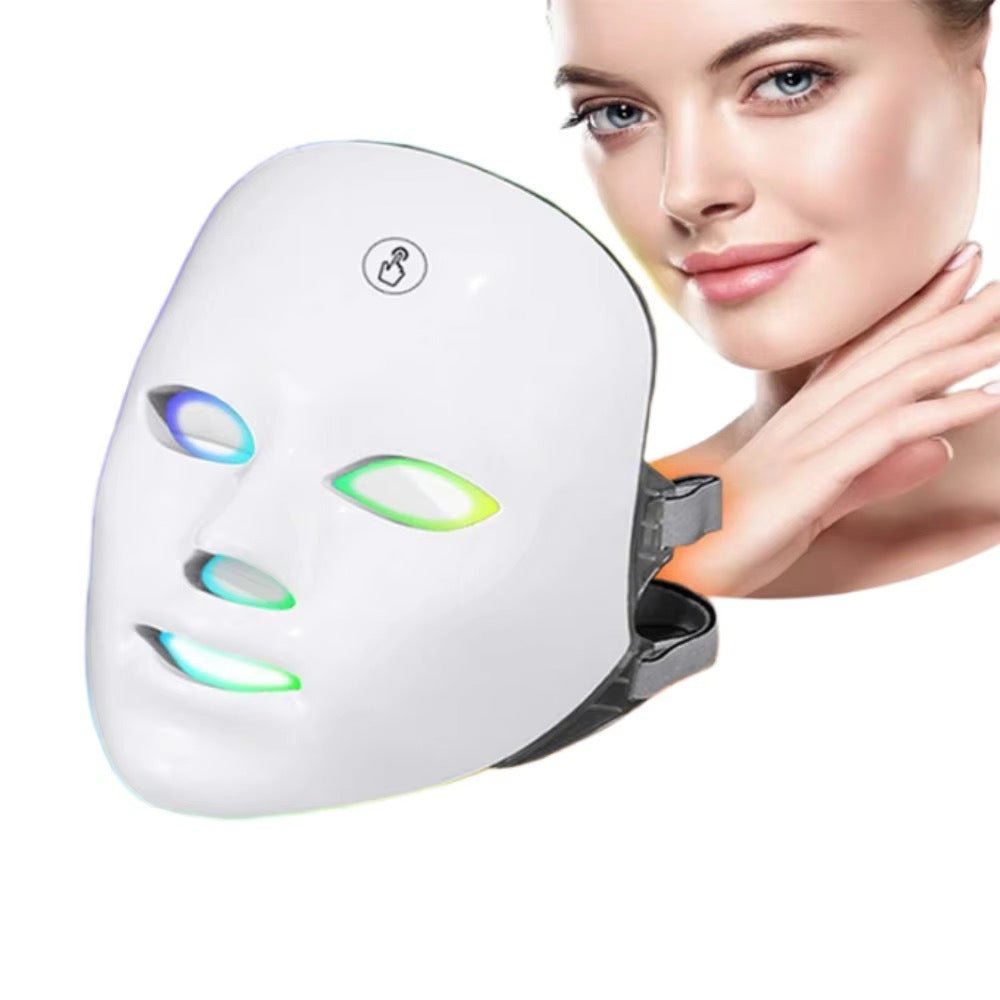
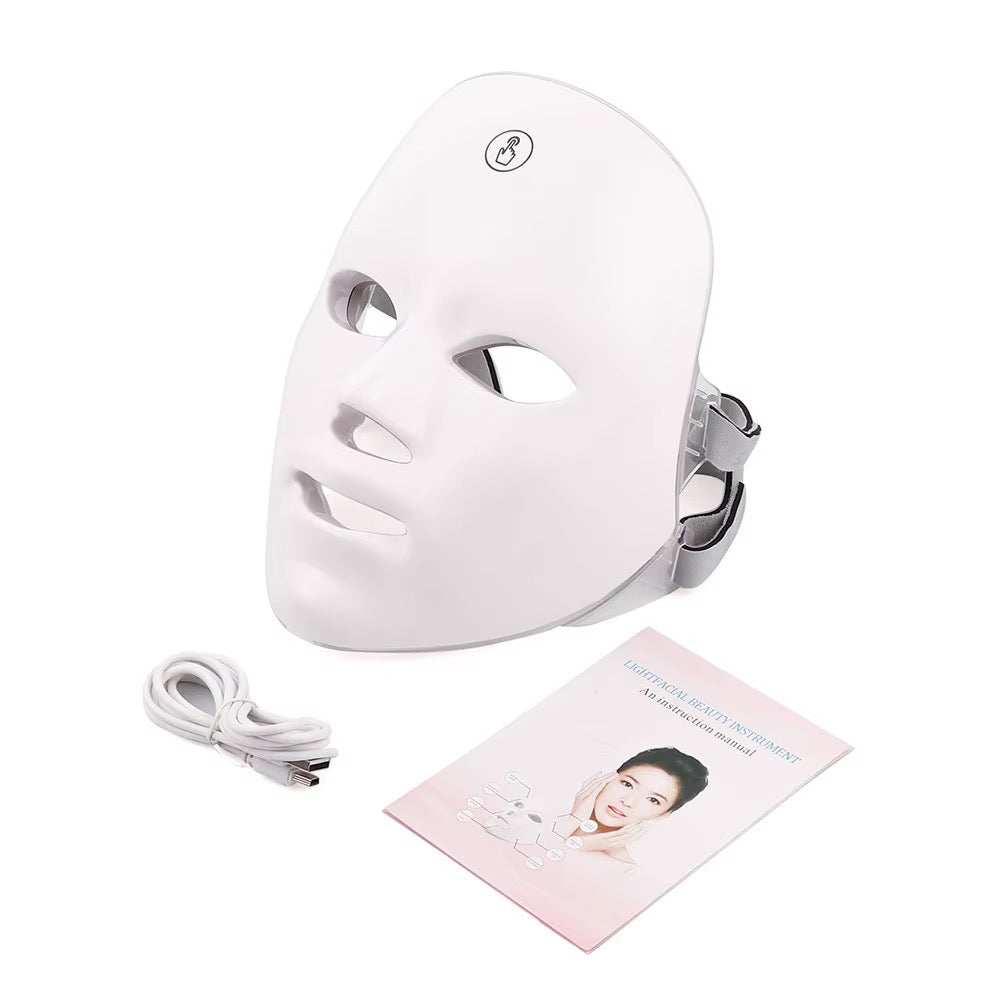
This is the framework we used for the CHOLORA LED Face Mask: seven LED light color modes, an adjustable strap for a personalised fit, a contoured design with simple touch-button control, a USB cable, and an instruction booklet that sets out session length and eye protection guidance. At $79.95, it is a low-risk way to test whether light therapy suits your skin before committing to clinic sessions.
Acne is stubborn, and no device replaces a good dermatologist. But a consistent, well-chosen routine makes a real difference over time.
Frequently Asked Questions
Does LED light actually help with acne?
Clinical research suggests visible light therapy can improve acne lesions. Clinical reviews report that visible-light therapy can improve acne lesions, though results vary by device and acne severity. LED light therapy is best viewed as a supportive treatment for mild-to-moderate acne, not a guaranteed standalone cure.
Is blue or red light better for acne?
They target different aspects of acne. Blue light therapy for acne works on Cutibacterium acnes bacteria on the skin, while red light therapy for acne focuses on inflammation and skin healing. Many studies and modern devices combine both wavelengths, such as a 2025 study that evaluated blue light at 415 nm and red light at 633 nm together. Combined use addresses both bacteria and inflammation.
Can LED light therapy make acne worse?
It can cause temporary irritation, redness, or dryness, particularly if sessions are too long or too frequent. People with photosensitivity or those taking certain medications should check with a doctor first. Following the device instructions, starting with shorter sessions, and using eye protection reduces the risk. If breakouts worsen or irritation persists, stop use and consult a dermatologist.
Is at-home LED light therapy safe for acne?
At-home LED masks are generally considered safe when used as directed, with eye protection and appropriate session lengths. Reviews of LED masks describe the evidence for acne as limited. Choose a device with clear instructions, avoid overuse, and treat at-home LED as a complement to, not a replacement for, standard acne treatments.
