
Last Updated: November 9, 2026
Quick Summary
An led mask for fine lines and wrinkles works by delivering low-level light energy into the skin to support collagen production and cellular repair without needles or downtime. A meta-analysis of clinical work found a 30% reduction in wrinkle depth using LED light therapy. Results build over weeks, not days.
- A 2025 sham-controlled trial found two weekly sessions worked as well as three for wrinkle improvement.
- The Mota trial of 137 participants found amber light at 590 nanometers reduced wrinkle volume comparably to red light.
- Red plus near-infrared is the baseline wavelength coverage, and amber adds value for sensitive skin.
- Two to three sessions a week is the evidence-backed treatment frequency range.
- FDA clearance is a safety benchmark for intended use, not a guarantee of wrinkle results.
Table of Contents
- How an LED Mask Targets Fine Lines and Wrinkles
- LED Face Mask Benefits Beyond Wrinkle Depth
- Red, Near-Infrared and Amber: Comparing Wavelengths
- What Separates the Best LED Mask for Fine Lines and Wrinkles
- Best FDA-Cleared LED Face Mask: What the Designation Means
- LED Mask for Fine Lines and Wrinkles Reviews: Reading Between the Lines
- Choosing Your LED Face Mask at Cholora
- Frequently Asked Questions
How an LED Mask Targets Fine Lines and Wrinkles
An LED mask for fine lines and wrinkles works by delivering low-level light energy into the skin, where it supports collagen production and cellular repair without needles or downtime. At Cholora, we built our guide around one question: does the evidence hold up? A meta-analysis of clinical work found a 30% reduction in wrinkle depth and a 60% decrease in acne using LED light therapy (review of clinical efficacy for LED light therapy). That is a meaningful result for a non-invasive device you use at home.
Here is the part most guides skip. The light does not "fill" wrinkles. It gives tired cells a nudge, and the skin does the rest over weeks.
What the Trial Data Actually Shows
The strongest signal comes from controlled work, not marketing pages. A 2025 sham-controlled trial found that two sessions a week worked as well as three for wrinkle improvement and patient satisfaction (Dr. Caroline Warden's guide to at-home LED therapy frequency). More sessions did not equal more results.
The Mota trial, covering 137 participants, found amber light at 590 nanometers produced a wrinkle-volume reduction statistically comparable to red light (Artemis comparison of light wavelengths). That finding matters because it widens the range of wavelengths worth considering.
One honest caveat: the Mayo Clinic Press guidance on at-home LED devices notes that long-term studies are still limited, and results vary between people.
LED Face Mask Benefits Beyond Wrinkle Depth
Wrinkle depth is the headline, but it is not the whole story.
The mechanism has a name: photobiomodulation, the process by which specific light wavelengths stimulate cellular activity in the dermal layer. Collagen production and skin elasticity are the two markers most studied.
Red, Near-Infrared and Amber: Comparing Wavelengths
Three wavelengths dominate the market, and each reaches skin differently. Red light sits around 630 to 660 nanometers and targets the surface layers. Near-infrared penetrates deeper, toward the dermal layer where collagen is built. Amber, near 590 nanometers, sits in the middle ground.
The 2026 shift is toward multi-wavelength devices. Devices such as the Wrinkle Retreat Pro now combine four wavelengths, including red, near-infrared, deep amber and amber (Solawave on multi-wavelength LED devices). The logic is coverage: one session, several depths.
| Wavelength | Approximate Depth | Primary Target | Best For |
|---|---|---|---|
| Amber (590nm) | Shallow | Surface tone | Sensitivity, first-time users |
| Red (630-660nm) | Mid | Fine lines, texture | Early aging signs |
| Near-infrared | Deep | Dermal layer, firmness | Mature skin, elasticity |
| Multi-wavelength | Combined | Several layers | All-in-one routines |
What Separates the Best LED Mask for Fine Lines and Wrinkles
The best LED mask for fine lines and wrinkles is the one you will actually wear for ten minutes a day, with the right wavelengths and a comfortable fit. Specification sheets matter less than consistency. But consistency only pays off if the protocol is right, so it helps to separate what the device must do from what you must do.
Four device features decide whether a mask earns its place on your shelf:
- Wavelength coverage. Red plus near-infrared is the baseline. Amber adds value for sensitive skin.
- Fit and contact. Manufacturers are moving toward soft, medical-grade silicone for better skin contact and comfort during ten-minute sessions (Forbes coverage of LED mask materials). A mask that gaps at the jaw delivers uneven light.
- Eye protection. Most masks shield the eyes, which also means the immediate eye area, including crow's feet, is not treated. That is a real limitation, not a flaw.
- Treatment frequency. Two to three sessions a week is the evidence-backed range. A device that makes that easy wins.
Watch out: buying on wavelength count alone. A four-wavelength mask with poor contact beats nothing, but a well-fitted two-wavelength mask usually beats it.
A Usage Protocol You Can Actually Follow
-
Start clean and dry. Apply the mask to bare skin. Leave serums and creams off until after the session, because a wet or occlusive layer can scatter light and reduce the dose that reaches the dermis.
-
Track the calendar, not the mirror. Wrinkle depth changes over weeks, not days. A simple photo log taken in the same light once a month is a more honest measure than a daily glance.
Matching Intensity to Your Skin Type
- Post-procedure or compromised skin: wait until the skin barrier has settled, and follow the clinician's guidance rather than the device booklet.
Best FDA-Cleared LED Face Mask: What the Designation Means
FDA clearance means a device has been reviewed as generally safe for its intended use when you follow the manufacturer's instructions (Consumer Reports safety guidance on at-home LED face masks). It is a safety benchmark, not a guarantee of wrinkle results.
That distinction gets blurred constantly. Clearance covers the safety profile and intended use; clinical efficacy still depends on wavelength, dose and consistency.
Side Effects to Expect, and When to Stop
Watch out: stop and reassess if you see blistering, a burn-like mark, or redness that persists into the next day. That pattern points to overexposure or a photosensitivity issue rather than a normal response, and it warrants a conversation with a clinician before the next session.
Who Should Avoid LED Light Therapy
- People taking photosensitizing medication, including certain antibiotics, acne drugs and diuretics. These can turn a mild light dose into a reaction.
- Anyone with a history of skin cancer or pre-cancerous lesions, who should treat any light exposure as a clinical decision.
- People with lupus or other photosensitive conditions, for the same reason.
- Pregnant users, not because harm is established but because the evidence base is thin and caution is the default.
- Anyone with active eczema, open wounds or a compromised barrier, until the skin has settled.
The Active-Skincare Conflict Most Guides Skip
A simple rule that covers most routines: mask first, actives second, moisturizer last. That ordering keeps the light dose predictable and the barrier intact, which is the whole point of a device you use for years rather than weeks.
LED Mask for Fine Lines and Wrinkles Reviews: Reading Between the Lines
Reviews are useful, but only if you know what you are reading. Most LED mask for fine lines and wrinkles reviews describe how a device felt, how it fit, and whether skin looked brighter after a few weeks. Very few measure anything objectively.
Three filters separate signal from noise:
- Duration of use. A review written after one week tells you about comfort, not results.
- Skin type stated. Mature skin and acne-prone skin respond differently to the same device.
- Consistency mentioned. Reviewers who used the mask on a fixed schedule give more useful feedback.
For deeper skincare reading, our news and guidance articles cover the wider routine.
Choosing Your LED Face Mask at Cholora
At Cholora, our CHOLORA LED Face Mask brings seven light colour modes and an adjustable head strap into a contoured design.

The touch-button control keeps sessions simple, and the kit includes a USB cable and an instruction booklet. Read the booklet before your first use and follow its guidance on eye protection, session length and frequency.
If you want to compare it against the rest of our range first, browse the full beauty collection before deciding.
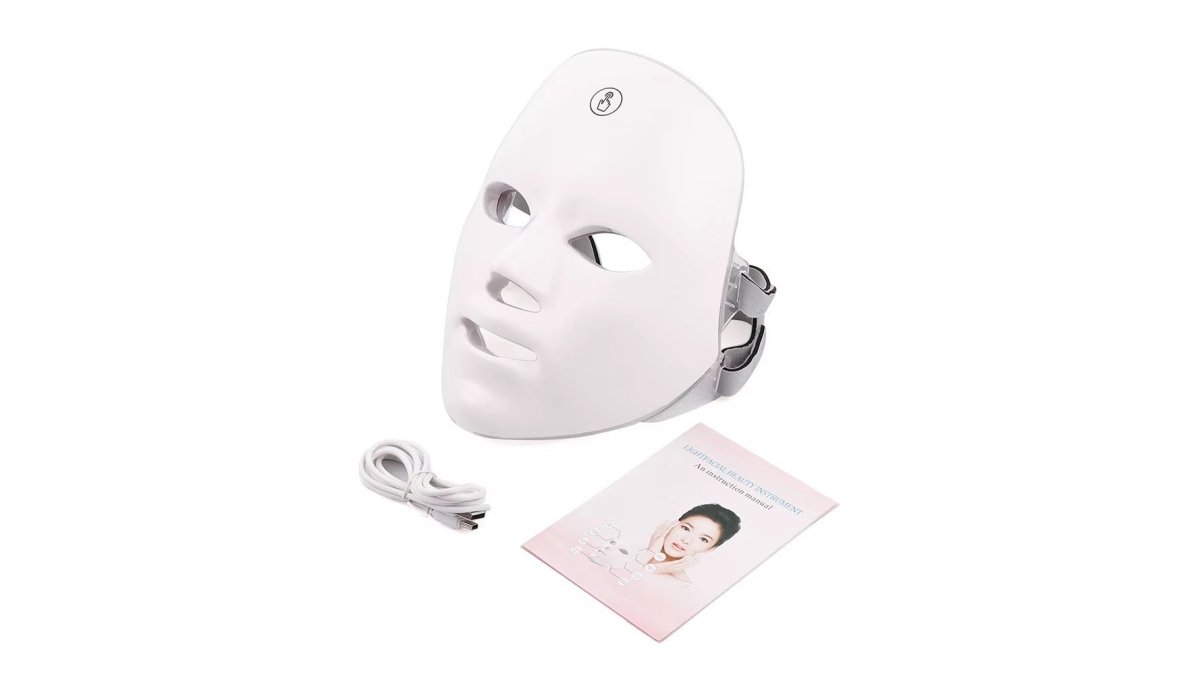
Fine lines do not need a clinic appointment to be addressed, but they do need consistency and the right wavelengths. Cholora's LED face mask gives you seven light colour modes, an adjustable strap for a personalised fit, and a contoured design built for a ten-minute daily ritual. Explore the collection and find the mask that fits your routine.
Frequently Asked Questions
Do LED masks really work to reduce wrinkles?
Clinical evidence points to yes, with caveats. Results vary between users, and long-term data on at-home devices is still limited, so treat an LED mask as a consistent routine rather than a single fix.
How often should you use an LED face mask for wrinkles?
Follow the instruction booklet that ships with your device for session length and frequency. Consistency over months matters more than squeezing in extra sessions.
What LED light helps with fine lines and wrinkles?
Red and near-infrared are the most studied for aging skin, with amber emerging as a genuine third option. The Mota trial found amber light at 590 nanometers produced a wrinkle-volume reduction statistically comparable to red light across 137 participants. Multi-wavelength devices combine these, such as four-mode setups covering red, near-infrared, deep amber and amber. Wavelength and irradiance matter more than the number of modes advertised.
Are LED face masks safe to use at home?
Follow the instruction booklet supplied with the device, including its guidance on eye protection and session length. If you use retinoids or acids, ask a dermatologist before combining them with sessions.
